Learn how to make money by selling AI apps to small businesses. Discover profitable niches, pricing strategies, client acquisition methods, and growth opportunities.
Introduction
Artificial Intelligence (AI) is transforming the way businesses operate. While large corporations have been investing in AI for years, small businesses are now rapidly adopting AI solutions to improve productivity, customer service, marketing, and sales.
This growing demand has created a major opportunity for entrepreneurs. You no longer need to be a software developer to profit from the AI industry. Thanks to modern no-code and AI-powered app builders, anyone can create and sell AI applications to small businesses.
In this guide, you’ll learn how to make money by selling AI apps to small businesses, why this market is growing, and how to build a scalable AI app business.
Why Small Businesses Need AI Apps
Many small business owners face common challenges:
- Limited staff
- Time-consuming administrative work
- Customer support demands
- Marketing challenges
- Lead generation difficulties
AI applications can help solve these problems by automating repetitive tasks and improving efficiency.
Examples include:
- AI chatbots
- Appointment booking assistants
- Customer support systems
- AI content generators
- Marketing automation tools
- Lead qualification systems
Because of these benefits, more small businesses are willing to invest in AI-powered solutions.
The Opportunity in Selling AI Apps
The AI market continues to grow rapidly across industries.
Small businesses often want AI solutions but may not have the budget to hire software developers or enterprise-level consulting firms.
This creates an opportunity for entrepreneurs who can offer affordable AI applications tailored to their needs.
You can earn money through:
- One-time app sales
- Monthly subscriptions
- Setup fees
- Maintenance services
- Customization packages
- Consulting services
Recurring subscription revenue is especially attractive because it can create predictable monthly income.
Step 1: Choose a Profitable Niche
Instead of targeting every business, focus on a specific niche.
Examples include:
Real Estate
AI lead generation tools, chatbots, and appointment schedulers.
Dental Clinics
Patient booking and automated reminders.
Restaurants
Online ordering assistants and customer support bots.
Fitness Coaches
Client onboarding and workout recommendation systems.
Local Service Businesses
AI-powered customer communication and lead management.
Specializing in one niche makes marketing easier and helps you become an expert.
Step 2: Identify Problems Businesses Want Solved
Business owners don’t buy technology—they buy solutions.
Before creating an AI app, identify a specific problem.
Examples:
- Too many customer inquiries
- Missed appointments
- Slow response times
- Difficulty generating leads
- Lack of marketing content
The more valuable the solution, the easier it becomes to sell.
Step 3: Use No-Code AI App Builders
You don’t need programming skills to create AI apps.
Modern AI platforms allow users to build applications using drag-and-drop interfaces and AI-generated workflows.
Benefits include:
- Faster development
- Lower costs
- Easier customization
- Quick deployment
This allows entrepreneurs to focus on solving business problems rather than writing code.
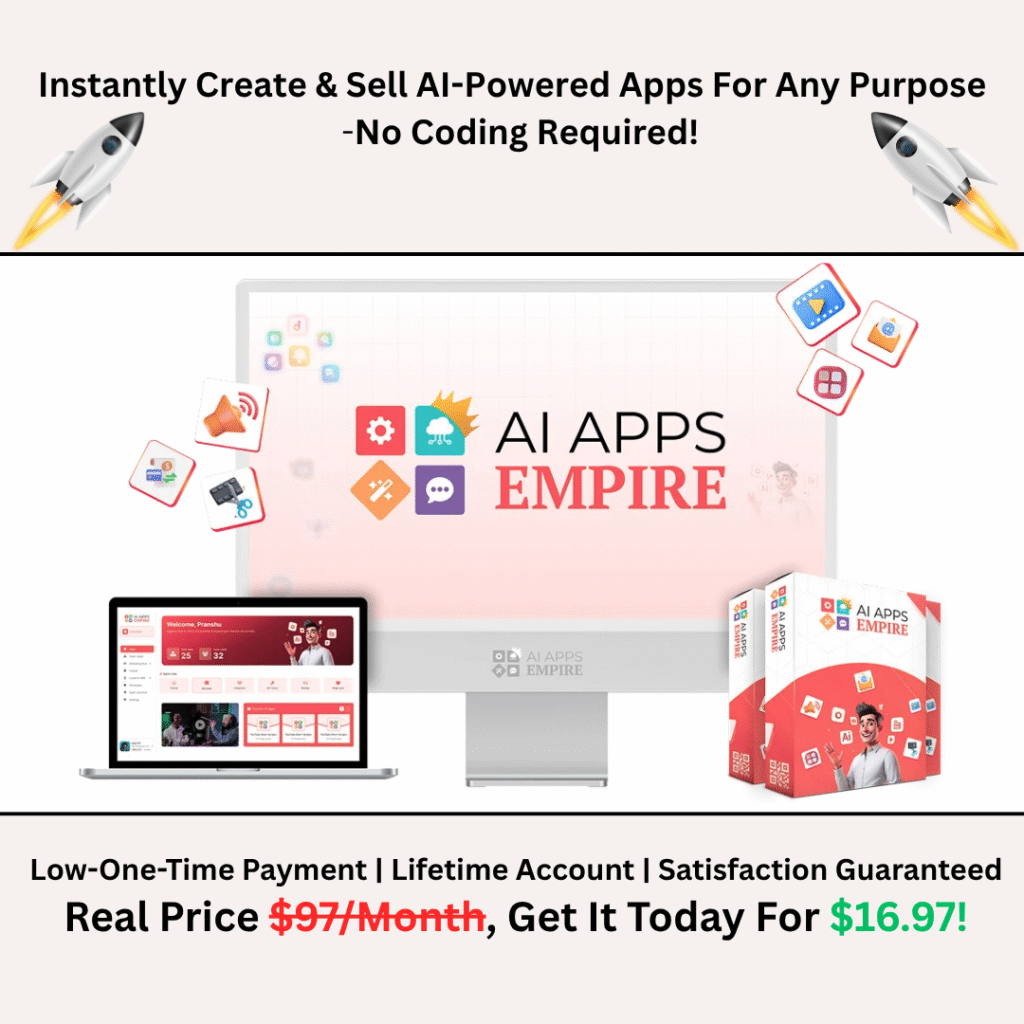
“If you want to build and launch your own AI apps business instantly with a special discount, check out the AI Apps Empire System.”
Step 4: Create a Simple Minimum Viable Product (MVP)
Avoid building complex software initially.
Start with a simple version that solves one core problem.
Examples:
- AI chatbot for customer support
- Appointment scheduling assistant
- Lead capture system
- AI content creation tool
A simple solution is often easier to sell and improve over time.
Step 5: Price Your AI App Correctly
Pricing depends on the value provided.
Common pricing models include:
One-Time Fee
Charge a fixed amount for setup and installation.
Monthly Subscription
Businesses pay every month to use the app.
Setup Plus Monthly Plan
Charge an initial setup fee and recurring monthly payments.
Example:
- Setup Fee: $199–$999
- Monthly Subscription: $29–$199
The right pricing depends on your target market and app functionality.
Step 6: Find Your First Clients
Getting your first customers is often the biggest challenge.
Effective methods include:
Cold Email Outreach
Contact local business owners and explain how your app can help them.
Connect with business owners and decision-makers.
Facebook Groups
Participate in industry-related groups.
Local Networking
Attend local business events and meet entrepreneurs.
Referrals
Happy clients can introduce you to additional customers.
Focus on helping rather than selling.
Step 7: Demonstrate the Value
Business owners want proof.
Show them:
- Time savings
- Cost reduction
- Increased leads
- Better customer support
- Improved efficiency
A live demo can significantly increase conversion rates.
When business owners see the benefits, they are more likely to become paying customers.
Step 8: Offer Ongoing Services
Many entrepreneurs make the mistake of selling the app once and moving on.
Additional services can increase revenue:
Technical Support
Help clients when issues arise.
Updates
Add new features and improvements.
Custom Integrations
Connect the app with existing business systems.
Training
Teach staff how to use the software effectively.
These services create additional income streams.
Step 9: Scale Your AI App Business
Once you have a successful solution, scaling becomes easier.
Ways to scale include:
- Selling to multiple businesses in the same niche
- Creating white-label versions
- Building subscription-based services
- Expanding into new industries
- Partnering with agencies
The goal is to create repeatable systems rather than custom-building every solution.
Common Mistakes to Avoid
Many beginners struggle because they:
- Target too many industries
- Build overly complex apps
- Ignore customer feedback
- Underprice their services
- Focus on technology instead of business results
Keep your solution simple and focused on solving a specific problem.
Future of AI App Sales
The demand for AI-powered business solutions is expected to continue growing.
Small businesses are increasingly looking for affordable ways to automate tasks, improve customer experiences, and stay competitive.
Entrepreneurs who learn how to create and sell practical AI applications today may benefit from this growing market for years to come.
“To speed up your journey and get access to ready-made tools, you can explore the AI Apps Empire System today.”
Conclusion
Learning how to make money by selling AI apps to small businesses can open the door to a profitable and scalable online business.
By focusing on a specific niche, solving real business problems, using no-code AI tools, and providing ongoing value, you can build a sustainable revenue stream without needing advanced technical skills.
As AI adoption continues to expand, small businesses will increasingly seek practical solutions that save time, reduce costs, and improve efficiency. Those who can deliver these solutions are well-positioned to succeed in the growing AI economy.